Logo image

Section 1.2 Rates, Ratios, and Dimensional Analysis

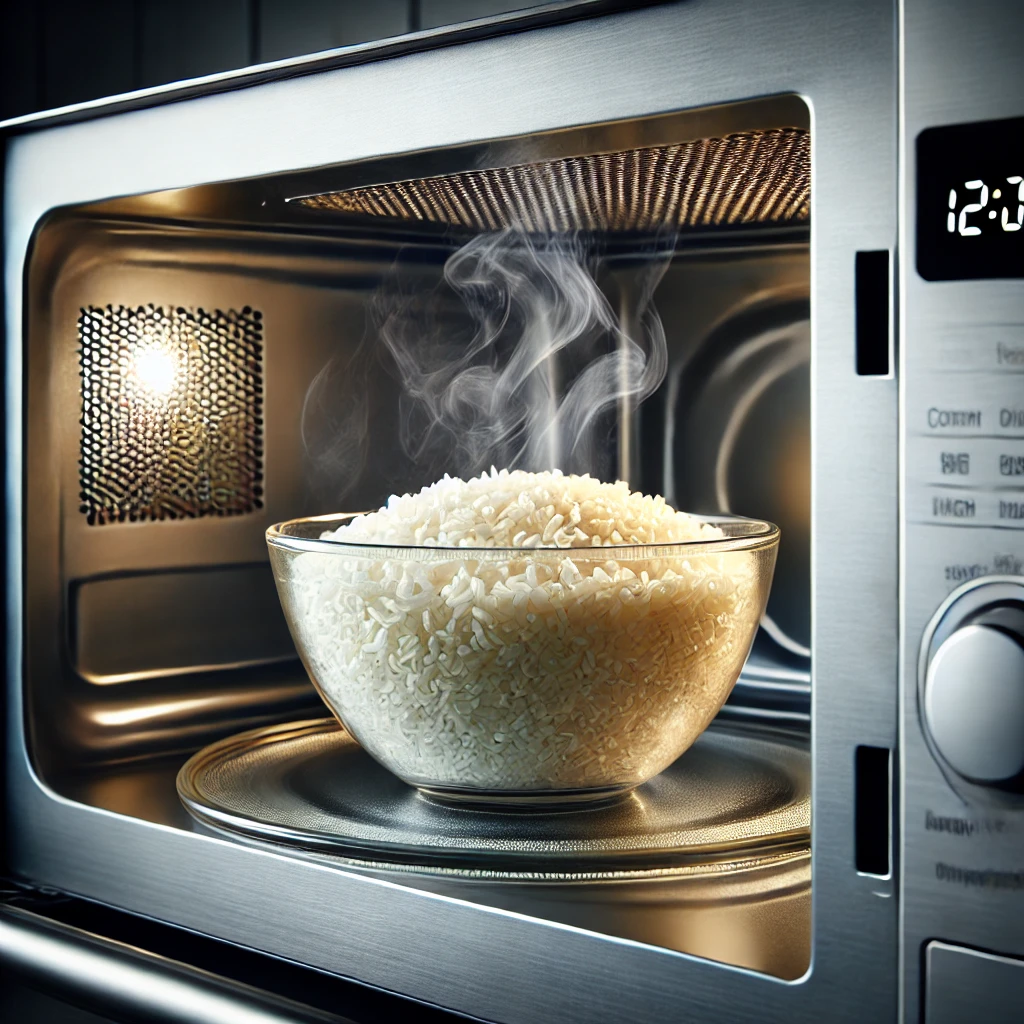
Steaming bowl of rice in a microwave.
When cooking rice, the amounts of water and rice should be proportional, meaning that the ratio of the amount of water to the amount of rice should be the same, regardless of how much rice you are cooking. For microwaved rice, that ratio is three parts water to two parts rice.
Proportional reasoning is the practice of using mathematics to solve problems involving ratios and rates, such as determining the amount of water to add to \(1 \frac{1}{2}\) cups of rice. (You should use \(2 \frac{1}{4}\) cups of water.)
In this section, we will explore applications of proportional reasoning in such practical situations as cooking, travel, and home improvement.

Subsection 1.2.1 Unit Rates

Imagine that you are at the grocery store comparing the prices for two brands of pasta sauce. One costs $3.50 for one jar while the other is on sale at $11.50 for three jars.
One way to approach the problem is to compare the price per jar or unit rate of each brand. (In this particular scenario, we might use the term unit price to be more specific.) The unit rate for the first brand is $3.50 per jar. To find the unit rate for the second jar, we divide:
\begin{equation*} 11.50\div 3\approx 3.83. \end{equation*}
Since the unit price of the first brand is lower, we find that it is the better deal.

Rate and Unit Rate.

Rate
A rate is the ratio of two quantities with different units such as 40 miles to 2 hours or \(\frac{40\text{ miles}}{2\text{ hours}}\text{.}\)
Unit Rate
A unit rate is a rate in which the denominator is implied to be one such as 20 miles per hour.
Unit Price
A unit price is a unit rate that communicates the cost per unit such as $0.4608 per ounce for a bag of chips.

Example 1.2.1.

The 2020 Census
 1 
US Census Bureau, "QuickFacts: Kitsap County, Washington, www.census.gov/quickfacts/fact/table/kitsapcountywashington/PST045223
reports that Kitsap County, Washington, has a population of 275,612 people and covers 395.1 square miles of land. Find the population density as a unit rate of people per square mile.
Solution.
\begin{equation*} \frac{275\,612}{395.1}\approx697.6\text{ people per square mile} \end{equation*}

Example 1.2.2.

One brand of eggnog costs $6.99 for 59 fluid ounces, and another brand costs $3.99 for one quart. (There are 32 ounces in one quart.) Calculate the unit prices to determine the better deal.
Solution.
For each brand, will divide the price by the volume in ounces to determine the unit price in dollars per ounce.
First brand:
\begin{equation*} 6.99\div 59\approx 0.1185. \end{equation*}
The unit price is $0.1185 per ounce.
Second brand:
\begin{equation*} 3.99\div 32\approx 0.1247. \end{equation*}
The unit price is $0.1247 per ounce.
Therefore, the first brand is a better deal. (Larger volume containers tend to be cheaper, but not always!)

Example 1.2.3.

At one store, bananas are $0.63 per pound. At another store, bananas cost $0.19 each. At what weight per banana is the first store’s price better, and at what weight is the second store’s price better?
Solution.
We are given two unit prices, but the units are different.
We are looking for the weight per banana, so let’s call that \(w\text{.}\)
At the first store, one banana will cost \(0.63w\text{.}\)
Recall that the second store charges $0.19 for one banana. Therefore, the first store’s price is better when
\begin{equation*} 0.63w \lt 0.19. \end{equation*}
Dividing both sides of the equation by 0.63 and rounding to four decimal places, we obtain
\begin{equation*} w \lt 0.3016. \end{equation*}
This means that the first store’s price is better if a banana weighs less than 0.3016 pounds.
Similarly, the second store’s price is better if a banana weighs more than 0.3016 pounds.

Example 1.2.4.

A rockclimber burns 16 calories per minute. How long will it take them to burn 200 calories?
Solution 1. Using a proportion
We first express the unit rate of 16 calories per minute as a fraction: \(\frac{16 \text{ calories}}{1\text{ minute}}\text{.}\)
The rate of calories to minutes when they burn 200 calories can be expressed as a fraction using the variable \(x\) to represent the number of minutes: \(\frac{200\text{ calories}}{x\text{ minutes}}\text{.}\)
The two rates must be equal, so we set up and solve an equation. (This is a special type of equation called a proportion.)
\begin{align*} \frac{16}{1} \amp=\frac{200}{x} \\ 16x\amp=1\cdot200 \\ x\amp=\frac{200}{16} \\ x\amp=12.5 \end{align*}
Therefore, it will take the climber 12.5 minutes to burn 200 calories.
Solution 2. Using "Rate × Time = Amount"
The "burn rate" in calories per minute times the number of minutes will equal the total number of calories burned. Using the variable \(x\) to represent the number of minutes, we can set up and solve an equation.
\begin{align*} 16x\amp=200 \\ x\amp=\frac{200}{16} \\ x\amp=12.5 \end{align*}
Therefore, it will take the climber 12.5 minutes to burn 200 calories.

Subsection 1.2.2 Unit Conversions

To convert units, we will use the strategy of multiplying by a "fancy one". The technical term for this approach is dimensional analysis. For example, since one pint is equal to two cups, both of these fractions are equal to one:
\begin{equation*} \frac{1\text{ pint}}{2\text{ cups}}=\frac{2\text{ cups}}{1\text{ pint}}=1 \end{equation*}
The fractions \(\frac{1\text{ pint}}{2\text{ cups}}\) and \(\frac{2\text{ cups}}{1\text{ pint}}\) are called conversion factors because they are factors (multipliers) used to convert between units.
To convert between pints and cups, we can multiply by the conversion factor that will result in the original units being "divided out", leaving an equivalent value in terms of the new units. For example, suppose we needed to convert \(5.25\) cups to pints.
we start by writing \(5.25\) cups as a fraction: \(\frac{5.25 \text{ cups}}{1}\text{.}\)
Because we would like to "divide out" the cups units from the numerator, we multiply by the conversion factor that has cups in the denominator, \(\frac{1 \text{ pint}}{2 \text{ cups}}\text{,}\) as follows:
\begin{equation*} \frac{5.25 \cancel{\text{ cups}}}{1}\cdot \frac {1 \text{ pint}}{2 \cancel{\text { cups}}}=\frac{5.25 \text{ pints}}{2}=2.625 \text{ pints} \end{equation*}
Because we have just multiplied by one, the value stays equivalent in the new units.
The reader may point out correctly that converting between pints and cups is done more quicky by just multiplying and dividing by two. However, when multiple conversions must be done in sequence and there are units in both the numerator and denominator of an expression, conversion factors simplify the process. Following are some more involved examples. A list of common unit conversions is found at the end of this section in Subsection 1.2.4.

Example 1.2.5.

Convert 20 miles per hour to feet per minute.
Solution 1. Step-by-step approach
There are 5280 feet in one mile and there are 60 minutes in one hour.
We start by writing 20 miles per hour as a fraction: \(\frac{20\text{ mi}}{1\text{ hr}}\text{.}\)
To divide out the miles in the numerator, we will use a conversion factor with miles in the denominator; the numerator will be 5280 feet.
\begin{equation*} \frac{20\cancel{\text{ mi}}}{1 \text{ hr}}\cdot\frac{5280\text{ ft}}{1\cancel{\text{ mi}}}=\frac{105\,600\text{ft}}{1\text{hr}} \end{equation*}
To divide out the hour in the denominator, we will use a conversion factor with hours in the numerator; the denominator will be 60 minutes.
\begin{equation*} \frac{105\,600\text{ ft}}{1\cancel{ \text{ hr}}}\cdot\frac{1\cancel{\text{ hr}}}{60\text{ min}}=1760\text{ ft/min} \end{equation*}
Therefore, a vehicle moving 20 miles per hour travels 1,760 feet each minute.
Solution 2. All-at-once approach
Note that we can complete both conversions in one step as follows:
\begin{equation*} \frac{20\cancel{\text{ mi}}}{1\cancel{\text{ hr}}}\cdot\frac{5280\text{ ft}}{1\cancel{\text{ mi}}}\cdot\frac{1\cancel{\text{ hr}}}{60\text{ min}}=1760\text{ ft/min} \end{equation*}
Therefore, a vehicle moving 20 miles per hour travels 1,760 feet each minute.

Example 1.2.6.

A recipe calls for 3 tablespoons of sugar. A home chef is quadrupling the recipe. How much sugar will they need in cups?
Solution.
They will need \(3\cdot 4 =12\) tablespoons of sugar.
We make use of the conversions that there are two tablespoons in an ounce and eight ounces in a cup.
\begin{equation*} \frac{12\cancel{\text{ tablespoons}}}{1}\cdot \frac{1 \cancel{\text{ ounce}}}{2 \cancel{\text{ tablespoons}}}\cdot\frac{1 \text{ cup}}{8 \cancel{ \text{ ounces}}}=\frac{3}{4}\text{ cups} \end{equation*}
The home chef should use \(\frac{3}{4}\) of a cup of sugar.

Subsection 1.2.3 Proportional Reasoning with Rates and Ratios

There are many real-life problems in which proportional reasoning can be applied. Some examples from various contexts follow.

Example 1.2.7.

You are making many pizzas for a large party. Your favorite recipe makes 20 ounces of dough, which is the right amount for two 12-inch diameter pizzas. You plan to make six 16-inch pizzas for the party. By what factor should you multiply or scale the recipe, and how many ounces of dough will that make?
Solution.
Assume that the thickness of a 16-inch pizza is the same as the thickness of a 12-inch pizza. You can compare the total area of pizza made from one recipe with the total area of pizza you plan to make for the party.
The formula for the area of a circle of radius \(r\) is \(A=\pi r^{2}\text{.}\) Recall that the radius of a circle is half of its diameter, so the original recipe makes two 6-inch radius pizzas and you want to make six 8-inch radius pizzas. Those areas are as follows:
Original Recipe: Two pies of radius 6 inches
\begin{equation*} A=\pi (6)^{2}\cdot2=72 \pi \text{ square inches} \end{equation*}
For Party: Six pies of radius 8 inches
\begin{equation*} A=\pi (8)^{2}\cdot 6=384 \pi \text{ square inches} \end{equation*}
The ratio of the area of pizza needed for the party to the area of pizza made by one recipe is \(\frac{384\pi}{72\pi}=\frac{16}{3}\approx 5.33\)
When we make the dough, we will multiply the amount of each ingredient by \(\frac{16}{3}\text{,}\) which is the factor you should use to scale up the recipe.
The resulting amount of dough should be \(20\cdot\frac{16}{3}\approx106.67\) ounces. For context, that is 6.67 pounds of dough. You will need a very large bowl!

Example 1.2.8.

Have you ever wondered how the speedometer on a car works? A car with 15.8-inch radius tires will move \(2\pi \cdot 15.8=31.6 \pi\) inches with each revolution. If the wheels are spinning 620 revolutions per minute, how fast is the car moving in miles per hour?
Solution.
Our goal is to convert 620 revolutions per minute (rpm) to miles per hour. To do this, we will start with the expression \(\frac{620 \text{ revolutions}}{1 \text { minute}}\) and apply the following conversions using dimensional analysis:
  • Convert revolutions to inches using the fact that each revolution moves the car \(31.6\pi\) inches.
  • Convert inches to feet and then feet to miles. There are 12 inches in one foot, and there are 5280 feet in one mile.
  • Convert minutes to hours.
\begin{equation*} \frac{620 \text{ rev}}{1 \text { min}} \cdot \frac {31.6\pi \text {in}}{1 \text{rev}} \cdot \frac{1 \text { ft}}{12 \text { in}}\cdot \frac{1 \text{mi}}{5280 \text{ ft}} \cdot \frac{60 \text{ min}}{1 \text{ hr}}\approx 58 \frac{\text{mi}}{\text{hr}} \end{equation*}
Note that all of the units divide away exept the miles in the numerator and the hours in the denominator. Therefore, the car is moving 58 miles per hour.
The above conversions can be done in any order, as long as we are careful about which units are in the numerator and which are in the denominator.
Comment: Most modern cars have electric sensors that measure the rotational speed (rpm) of the wheels and send that information to the car’s computer. The computer converts the rotational speed to linear speed in miles per hour. Because the calculation uses the tire size, if a car has the wrong sized tires, its speedometer will display an incorrect speed.

Example 1.2.9.

A one-gallon can of paint covers about 350 square feet. A room with nine-foot ceilings is 16 feet long and 14 feet wide. The room has two windows, each 36 inches wide and 52 inches high, and it has one door that is 30 inches wide and 80 inches tall.
The homeowner wishes to paint the walls of the room, excluding the windows and doors. How many cans of paint should the homeowner purchase?
Solution.
The room has two walls that are 16 feet long and nine feet high, and it has two walls that are 14 feet long and nine feet high. The resulting total area of walls is
\begin{equation*} 2(16\cdot9)+2(14\cdot9)=540 \text{ square feet.} \end{equation*}
Now we will find the areas of the door and windows. Note that the units are converted from inches to feet.
Door:
\begin{align*} \text{Area}\amp=\text{Width}\cdot\text{Height} \\ A \amp=\left( \frac{30 \text{ in}}{1}\cdot\frac{1 \text{ ft}}{12\text{ in}}\right)\cdot \left(\frac{80 \text{ in}}{1}\cdot\frac{1 \text{ ft}}{12\text{ in}} \right) \\ A \amp \approx 16.67 \end{align*}
The area of the door is about 16.67 square feet.
Windows:
\begin{align*} \text{Area}\amp=\text{Width}\cdot\text{Height} \\ A \amp=\left( \frac{36 \text{ in}}{1}\cdot\frac{1 \text{ ft}}{12\text{ in}}\right)\cdot \left(\frac{52 \text{ in}}{1}\cdot\frac{1 \text{ ft}}{12\text{ in}} \right) \\ A \amp =13 \end{align*}
The area of each window is about 13 square feet.
Now we subtract to find the resulting area that will be painted:
\begin{equation*} 540-(16.67)-2(13)=497.33 \end{equation*}
The homeowner has about 497.33 square feet of wall space that need to be painted.
Since each can covers about 350 square feet, the homeowner can expect to use \(497.33\div350\approx1.42\) cans.
They should purchase two cans of paint.

Subsection 1.2.4 Common Unit Conversions

Units of Length.

\begin{align*} 1\text{ foot} \amp=12\text{ inches} \\ 1\text{ yard} \amp=3\text{ feet} \\ 1\text{ mile} \amp=5\, 280\text{ feet} \end{align*}
\begin{align*} 1\text{ meter} \amp=100\text{ centimeters} \\ 1\text {meter} \amp=1\, 000\text{ milimeters} \\ 1\text{ kilometer} \amp=1\, 000\text{ meters} \end{align*}
\begin{align*} 1\text{ inch} \amp=2.54\text{ centimeters} \\ 1\text{ meter} \amp\approx 3.3 \text{ feet} \\ 1\text{ mile} \amp \approx 1.61 \text {kilometers} \end{align*}

Units of Volume.

\begin{align*} 1 \text{ tablespoon} \amp=3 \text{ teaspoons} \\ 1 \text{ ounce} \amp=2 \text{ tablespoons} \\ 1\text{ cup} \amp=8\text{ fluid ounces} \\ 1\text{ pint} \amp=2\text{ cups} \\ 1 \text{ quart} \amp= 2\text{ pints} \\ 1 \text{ gallon} \amp=4 \text{ quarts} \end{align*}
\begin{align*} 1\text{ Liter} \amp=1\, 000 \text{ milliliters} \\ 1\text{ Liter} \amp\approx 1.057 \text{ quarts} \end{align*}
Note that milliliters and cubic centimeters are the same unit and can be used interchangeably.

Units of Weight and Mass.

\begin{align*} 1 \text{ gram} \amp=1\, 000 \text{ milligrams} \\ 1\text{ kilogram} \amp= 1\, 000 \text{ grams} \end{align*}
\begin{align*} 1 \text{ pound} \amp= 16 \text{ ounces} \\ 1 \text{ kilogram} \amp \approx 2.2\text{ pounds} \end{align*}
The conversion between kilograms, which is a mass, and pounds, which is a weight, is valid for locations on the surface of the Earth. If you were to go to Mars, your mass (how big you are) would remain the same but your weight (how much force you exert on a scale due to gravity) would be reduced due to the weaker gravitational pull.
Since we live on the surface of the Earth, it is generally safe to convert between kilograms and pounds without worrying about the physics of mass and weight.

Exercises 1.2.5 Exercises

1.

Find the unit rate for each size and determine which is more cost effective? A 9.6-ounce cannister of coffee for $5.42 or a 40.3-ounce cannister of coffee for $14.87.

2.

Find the unit rate for each brand. Which is more cost effective? A 16-ounce jar of peanut butter for $4.88 or a A 28-ounce jar of peanut butter for $6.97.

3.

The population of the U.S. is about 309,975,000 people, covering a land area of 3,717,000 square miles. The population of India is about 1,184,639,000 people, covering a land area of 1,269,000 square miles. Compare the population densities of the two countries.

4.

The GDP (Gross Domestic Product) of China was $5,739 billion in 2010, and the GDP of Sweden was $435 billion. The population of China is about 1,347 million, while the population of Sweden is about 9.5 million. Compare the GDP per capita of the two countries.

5.

Determine whether the implied rates and ratios are equivalent.
  1. One brand of printer can print 45 pages in 5 minutes, and another can print 96 pages in 8 minutes.
  2. A backpacker hikes 11 miles in 2 days and then 16.5 miles in the next 3 days.

6.

Determine whether the implied rates and ratios are equivalent.
  1. You read 56 pages in 2 hours and then 140 pages in 5 hours.
  2. A runner runs a 50 m race in 6.8 sec and a 400 m race in 50.5 seconds.

7.

How many yards are in one kilometer?

8.

A crepe recipe calls for 2 eggs, 1 cup of flour, and 1 cup of milk. How much flour would you need if you use 5 eggs?

9.

A smoothie recipe uses one and a half cups of yogurt, a banana, and other ingredients to make 4 cups. How many cups of yogurt are needed for 6 cups of smoothies?

10.

An 8-ft length of 4-inch-wide crown molding costs $14. How much will it cost to buy 40 feet of crown molding?

11.

If a car travels 160 miles in 3 hours, how long will it take to travel 250 miles at the same speed?

12.

Four 3-megawatt wind turbines can supply enough electricity to power 3,000 homes. How many turbines would be required to power 55,000 homes?

13.

A highway had a landslide, where 3,000 cubic yards of material fell on the road, requiring 200 dump truck loads to clear. On another highway, a slide left 40,000 cubic yards on the road. How many dump truck loads would be needed to clear this slide?

14.

If four packets of lettuce seeds are enough to plant 25 square meters, how many packets should be purchased to plant 60 square meters?

15.

Two bundles of shingles cover 50 square feet. How many bundles are needed to cover a roof of 660 square feet?

16.

If one US dollar is equivalent to 0.91 euros(EUR), how many dollars will you get back for 170 EUR?

17.

If one US dollar is equivalent to 17.13 Mexican Pesos (MXN), how many dollars will you get back for 2,000 MXN?

18.

Your chocolate milk mix says to use 4 scoops of mix for 2 cups of milk. After pouring in the milk, you start adding the mix, but get distracted and accidentally put in 5 scoops of mix. How much more milk should you add?

